

Best Travel eSIM Plans for Global Connectivity in 2025
Travel eSIMs are a total game-changer for staying connected abroad without the hassle of physical SIM cards. You simply scan a QR code from your provider to download a digital profile onto your phone, instantly granting you local data plans in your destination. This means no more swapping tiny cards, hunting for local SIM shops, or overpaying for roaming fees. Just activate, arrive, and keep scrolling like you never left home.
Why Your Next Trip Needs a Digital SIM
Your next trip needs a digital SIM because it turns your phone into a local device the moment you land. No hunting for airport kiosks or overpaying for roaming—you install a travel eSIM before you leave. Tap into instant, affordable data in your destination, keeping maps, translation apps, and social feeds active without physical plastic cards. Forget swapping SIMs or risking losing yours; it’s a seamless switch between networks.
The real key: you avoid bill shock by controlling costs upfront with a data package that activates on arrival
. That freedom means you spend trip time exploring, not fiddling with connectivity.
How embedded SIM cards cut roaming costs instantly
An embedded SIM kills roaming fees the second you land by letting you switch to a local data plan before your plane taxis. Instead of paying your home carrier’s daily rip-off rate, you tap through a travel app and buy a regional eSIM data package for a few bucks. That instant swap bypasses international billing entirely because the eSIM connects directly to affordable local networks. You never even remove your primary SIM, so your home number stays active for calls while the embedded chip handles cheap data. No physical card swapping, no searching for a store—just immediate savings from the moment you switch.
Freedom from plastic SIM swaps at airport kiosks
No more fumbling with a sim-eject tool or juggling your primary SIM while standing tired at an airport kiosk. With an eSIM you skip that whole plastic-swap dance—just scan a QR code or tap to activate minutes after landing. You keep your home number active for bank codes while your travel data runs alongside it. Ditching stressful kiosk swaps means you walk straight to baggage claim, not into a queue for a tiny piece of plastic. Your phone stays seamless from gate to taxi.
Freedom from plastic SIM swaps at airport kiosks means landing and connecting instantly, with both your home and travel lines working together—no fumbling, no queue, just your phone ready to go.
Step-by-Step Guide to Activating a Data Package
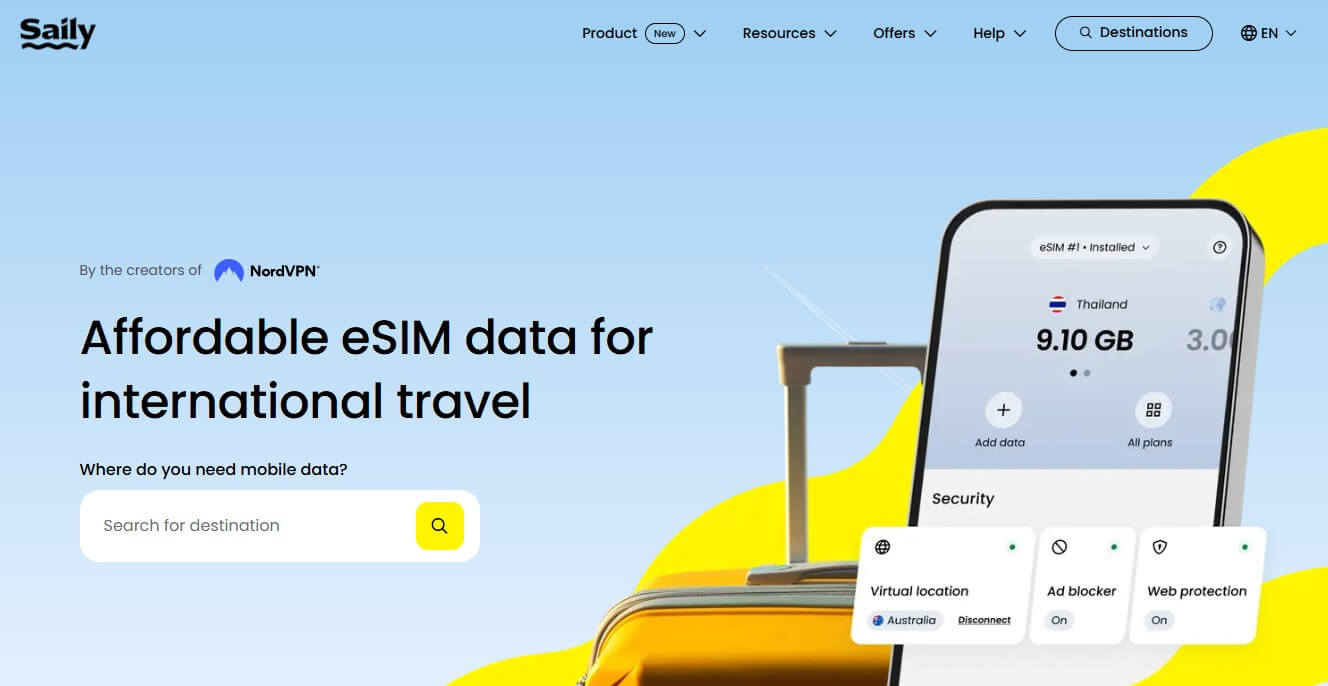
Begin by purchasing your travel eSIM plan online, ensuring it covers your destination country. After checkout, you will receive a QR code or an activation link via email. Open your phone’s settings and navigate to “Mobile Data” or “Cellular,” then tap “Add eSIM.” Scan the provided QR code directly from your email or downloaded file, and follow the on-screen prompts to label your new line (e.g., “Travel Data”). Enable “Data Roaming” on this specific line and set it as your primary data source. Once activated, the plan will connect you to a local network upon arrival. For seamless switching, consider leaving your primary physical SIM active for calls but disabling its data roaming to avoid charges. Your data package is now ready for use abroad.
Choosing the right plan for short getaways versus long journeys
For a short getaway, prioritize a fixed-data plan with a low gigabyte allowance and a short validity window, typically 1 to 7 days, to avoid paying for unused data. In contrast, long journeys demand a high-data-volume plan with extended validity, often 15 to 30 days, ensuring consistent coverage as you move between regions.Choosing the right plan for short getaways versus long journeys hinges on matching data caps to your usage intensity—light browsing for a weekend versus streaming or navigation for weeks.
Q: How do I choose between a regional plan and a local plan for a long journey?
A: For a multi-country trip, a regional plan offers seamless cross-border coverage; for a single country, a local plan usually provides more data at a lower cost, making it the smarter choice for extended stays.
Scanning a QR code or installing via a provider app
After purchase, most travel eSIMs activate via scanning a QR code or installing via a provider app. If you receive a QR code, open your phone’s settings, navigate to cellular or mobile network, and select “Add eSIM.” Scan the code to download the profile directly. Alternatively, many providers require you to install their app, log into your account, and tap an “Install eSIM” button, which automates the same profile download. Code scanning is typically faster, while app-based installation offers one-tap management of multiple plans. Both methods require a stable Wi-Fi connection initially.
Q: Can I scan a QR code without an internet connection?
A: No, you need Wi-Fi to download the eSIM profile, but after activation, the plan uses mobile data.
Country-Specific Hacks for Seamless Connectivity

For Japan, download your eSIM profile before you land—airport Wi-Fi often blocks large file transfers. In China, pre-load a VPN-friendly eSIM that supports foreign apps, as local SIMs gate many services. Q: What’s the top hack for Dubai? A: Buy a regional UAE eSIM that prioritizes 5G in malls and metros, avoiding spotty free zones. For rural Iceland, grab an eSIM from a provider with strong 3G fallback, as 4G can drop near glaciers. In Australia, activate “data-only” mode on your phone to skip costly voice add-ons. Always test your eSIM’s APN settings at the departure gate, not your coffee shop—quick adjustments save roaming headaches.
Navigating multi-country tours with a regional data bundle
Navigating multi-country tours with a regional data bundle requires pre-trip verification of your eSIM’s country list, as “regional” coverage often excludes certain nations. Activate the bundle only upon landing in the first country to avoid premature timer consumption. Follow this sequence: 1) Install the eSIM profile before departure using Wi-Fi. 2) On arrival, disable your primary SIM’s data roaming in settings. 3) Select the regional eSIM as your default mobile data line. Expect slower speeds in border zones as the network hands off between providers. Download offline maps for each stop beforehand to buffer against spotty cross-border connectivity.
Avoiding throttling on popular tourist routes
To dodge data throttling on packed routes like Bali’s beaches or Tokyo’s metro, choose a travel eSIM with a true unlimited data plan instead of a “fair use” cap. Operators often slow speeds after you hit a hidden limit, so opt for providers that advertise no throttle policies on their top tiers. Download offline maps for the Amalfi Coast or Machu Picchu trail before departure—this minimizes real-time data drains in congested zones. Avoid streaming in high-demand hotspots like the Eiffel Tower or Times Square; instead, buffer content during off-peak hours to keep your connection snappy. Prioritize eSIMs that route through multiple local carriers to bypass single-network bottlenecks.
Comparing Prepaid SIMs and Virtual Alternatives
When planning a trip, comparing prepaid SIMs and virtual alternatives like travel eSIMs boils down to convenience versus physical access. A traditional prepaid SIM forces you to find a store, swap cards, and potentially juggle your home SIM—an easy process but a tangible hassle. In contrast, a travel eSIM lets you activate a data plan instantly via a QR code before you even leave, keeping your physical slot free for a local number if needed. The core trade-off is that eSIMs rely entirely on digital compatibility, whereas a prepaid SIM works in any unlocked phone. For most travelers, the instant activation and ability to keep your primary line active make the virtual option far less stressful, even if a physical SIM might offer cheaper local rates in some regions.
Cost breakdown per gigabyte across major providers
For prepaid SIMs, a standard 1GB regional add-on from providers like Vodafone or Orange often costs between $7 and $12. Dedicated travel eSIM providers such as Airalo, Holafly, and Ubigi offer significantly lower cost per gigabyte for travel eSIM. For example, Airalo’s 1GB global pack starts near $4.50, while Holafly’s unlimited plans effectively price a full day’s data at roughly $2.00 per GB. Ubigi’s regional 10GB option can drop to under $3.00 per gigabyte, making virtual SIMs notably cheaper than physical roaming options.
| Provider | Typical Price per GB (Small Pack) | Typical Price per GB (Large Pack) |
|---|---|---|
| Physical SIM (Roaming) | $8–$15 | $6–$10 |
| Airalo | $4.50 | ~$2.50 |
| Holafly | ~$2.00 (unlimited day pass) | ~$2.00 |
| Ubigi | $5.00 | ~$2.80 |
Speed reliability in remote villages versus city centers
In city centers, a travel eSIM typically delivers blistering 5G speeds, making urban navigation seamless. The real test comes in remote villages, where you might drop to 3G or even 2G. This isn’t about network failure, but prioritization; physical towers are scarce, and data from a local host network often gets throttled before a virtual SIM’s traffic. For reliable connectivity off-grid, village data speed variance is the key hurdle, demanding patience rather than a panic reboot.
City centers offer peak 5G from travel eSIMs, while remote villages often throttle speeds to 3G or 2G due to limited infrastructure and network prioritization.
Device Compatibility Checklist Before You Leave
Before you board, grab your phone and confirm it’s unlocked—an eSIM needs this freedom. Check your device’s compatibility list for eSIM support; many newer models work, but some regional variants do not. I once saw a traveler stranded because their carrier-locked phone rejected the profile. Your device’s IMEI must accept remote provisioning. Then, ensure your phone runs the latest OS update—older versions can fail to install the eSIM package. Finally, test your connection by scanning the QR code or entering the activation code before departure, while you still have Wi-Fi.
Many travelers overlook that dual-SIM phones often restrict which slot gets the eSIM—verify this in your settings to avoid a last-minute panic.
This simple checklist saves you from fumbling at the airport gate.
Verifying eSIM support on iPhones, Androids, and newer tablets
Before departure, verifying eSIM support requires checking your device’s compatibility. On iPhones, navigate to Settings > General > About and look for “Digital SIM” or an IMEI2 entry—models from the XS/XR onward support eSIM. For Androids, open Settings > Connections > SIM Manager; if “Add eSIM” appears, it is supported, though Pixel 3a+, Samsung Galaxy S20+, and newer flagships are typical. Newer tablets like iPad Pro (2018+) and select Samsung Tabs include eSIM, but always confirm via the device’s IMEI lookup on your carrier’s site.
- Check iPhone model: XS or newer (excluding SE 1st gen).
- On Android, search “eSIM” in Settings to verify the menu.
- For tablets, confirm cellular model explicitly lists eSIM capability.
- Cross-reference your IMEI with your travel eSIM provider’s compatibility tool.
Unlocking carrier restrictions for international use
Before purchasing a travel eSIM, confirm your device is carrier-unlocked for international roaming. A locked phone restricts eSIM profiles to only the original carrier’s network, blocking foreign providers. Contact your carrier for a permanent unlock code or request temporary unlocking if eligible. This process often requires the device to be paid off, active for a set period, and not reported stolen. Unlocking ensures the eSIM can switch to local networks abroad, avoiding data disruption. Verify the unlock is applied before departure by inserting a different carrier’s SIM—if the phone accepts it, the restriction is removed.
Unlocking carrier restrictions is the prerequisite step, allowing the travel eSIM to connect to foreign networks without software or hardware barriers.
Troubleshooting Common Network Issues Abroad
When an eSIM fails to activate abroad, force a manual network selection in your device settings to bypass automatic roaming errors. For persistent no-service, toggle airplane mode or physically remove and reinsert your primary SIM to trigger a fresh network registration. If data remains slow, check that your eSIM’s APN matches the provider’s exact specifications, as incorrect settings are a primary cause of connectivity drops. Q: Why does my eSIM work in one city but not another? A: Local infrastructure or roaming partner congestion may cause this; switch your carrier preference to a different available network via manual selection. Always download the eSIM profile over stable Wi-Fi before departure to avoid activation failures at your destination.
Fixing delayed activation after landing
If your eSIM doesn’t kick in right after landing, first toggle airplane mode on and off. This forces the device to re-scan for local networks. If that fails, manually select your eSIM’s home carrier in the cellular settings. Next, power-cycle your phone—a full restart often triggers activation. For persistent delays:
- Disable automatic network selection, then pick the local partner network manually.
- Double-check that your phone’s data is set to the eSIM line, not your home SIM.
- Enable data roaming for that eSIM profile.
Most activation issues stem from the phone clinging to your previous connection; these steps force it to switch.
Switching between local and international profiles mid-trip
Switching between local and international travel eSIM profiles mid-trip is usually straightforward but hinges on your phone’s settings. Before you leave, make sure both profiles are installed and clearly labeled. When you land in a new country, simply go to your cellular settings and toggle which line you want active for data. A common snag? Forgetting to disable “automatic network selection” on your primary profile, which can accidentally trigger roaming fees. Stick to manual selection on each profile, and you’ll swap between a local plan and your home international plan without missing a beat.
Security and Privacy While Roaming
When you roam with a travel eSIM, your data is shielded from local network surveillance because the connection bypasses foreign carriers and routes directly to your home provider or a secure global partner. This prevents local operators from logging your browsing history or intercepting transmitted information. For optimal privacy, always choose an eSIM that uses end-to-end encryption and never relies on public Wi-Fi during activation.
Because your digital identity is tied to a secure profile rather than a physical SIM, a travel eSIM eliminates the risk of SIM-swapping attacks while abroad.
Additionally, using a separate eSIM for data keeps your primary line’s personal number hidden from foreign networks, ensuring that only your internet traffic is exposed—and even then, only to the trusted encrypted tunnel.
Using encrypted connections even with temporary numbers
Even when using a temporary travel eSIM number, always choose encrypted connections for roaming. Your temporary number doesn’t automatically protect your data, so manually enable a VPN on your device before any browsing. For messaging apps, confirm end-to-end encryption is active in their settings. When accessing online banking or sensitive accounts, stick to HTTPS sites and avoid public Wi-Fi hotspots. A simple routine to follow:
- Activate VPN immediately upon connecting to your travel eSIM.
- Double-check app encryption icons (like the padlock) before sending messages.
- Disable auto-join for open networks, even with a temporary number active.
Protecting personal data on shared or public Wi-Fi alternatives
When roaming, public Wi-Fi is a prime vector for data interception, but a travel eSIM inherently mitigates this by establishing a dedicated, encrypted cellular connection. For maximum protection, treat your travel eSIM as a direct alternative to shared networks by enabling VPN encryption over cellular data. This layered approach ensures all traffic, even to unencrypted sites, is tunneled away from potential packet sniffers on open routers. Never disable cellular data to join a public hotspot; instead, keep your eSIM active and tether only via a personal, password-protected hotspot. This physically isolates your device from shared broadcast domains, neutralizing man-in-the-middle attacks that prey on Wi-Fi vulnerabilities.
Budgeting Data for Remote Work and Streaming
When budgeting data for remote work and streaming with a travel eSIM, prioritize a plan offering at least 10GB for a week-long trip to handle video calls and HD content. For daily video conferencing, allocate roughly 500MB per hour, while streaming in 720p consumes about 1GB per hour. Choose high-speed priority data over a massive cap, as throttled speeds render live streams unusable. Always overestimate your needs by 20% to avoid costly top-ups mid-trip. Travel eSIM plans from regional providers often offer better per-GB rates for remote work than global ones, so compare dedicated packages. Use local offline maps and download work documents ahead to stretch your allowance for streaming during downtime.
Estimating daily usage for video calls and map navigation
To avoid data overruns with your travel eSIM, estimate video calls at roughly 150–250 MB per hour for standard quality, while map navigation uses about 5–10 MB per 10 minutes of active routing with satellite view. For a heavy usage day, assume 1 GB for a few calls plus constant map checks. Preload maps offline to slash navigation data to nearly zero, preserving your allowance for calls. Daily budgeting becomes straightforward with these baselines.
- Reduce video call resolution to save up to 70% data per minute.
- Download entire city maps on Wi-Fi before your trip.
- Use map updates only when out of range of known routes.
Topping up plans without hunting for local top-up cards
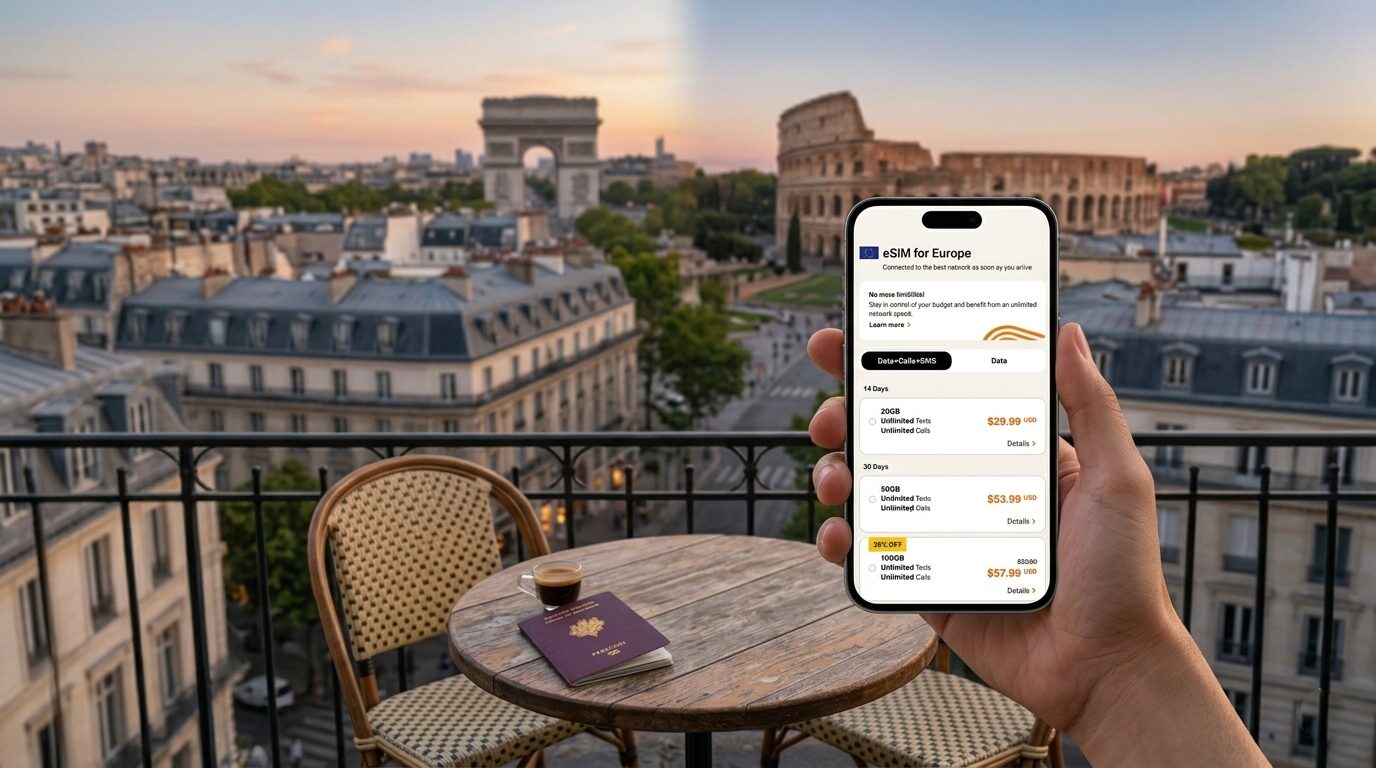
Managing data costs abroad becomes seamless when you can top up plans directly from your phone. Travel eSIMs eliminate the need to search for physical top-up cards in local shops, saving time and reducing stress. Direct digital top-ups allow you to add data instantly via a provider’s app or website, often with credit card or PayPal. This is particularly useful for remote work, as you can avoid losing connectivity mid-stream. The process typically shows remaining balances and suggests suitable add-ons based on your usage.
- Top up from any location without visiting a store.
- Receive instant activation of added data.
- Choose from multiple data amounts tailored to streaming needs.
- Track consumption to avoid accidental overspend.
Eco-Friendly Benefits of Skipping Physical Cards
Every time you board a flight without a handful of plastic SIM cards, you are choosing to leave a tiny pile of PVC waste behind. That physical card, once snapped from its frame, required petroleum-based materials and chemical processing, only to end up in a landfill or incinerator after your trip. By choosing a travel eSIM, you bypass that entire lifecycle. Your phone’s memory becomes the only “slot” needed, and no plastic packaging, card, or toxic residue is ever produced. For each journey, that decision quietly cuts down on manufacturing demand and shipping fuel, letting you connect abroad without the environmental toll of physical cards. The plastic never has to exist, and that is the most direct eco-friendly benefit of all.
Reducing plastic waste from disposable SIM packets
Disposable SIM cards contribute significantly to plastic pollution, as each card and its packaging require decades to decompose. Choosing a travel eSIM eliminates this physical waste entirely, as there is no plastic carrier or blister pack to discard. Reducing plastic waste from disposable Singapore eSIM SIM packets is achieved through a simple shift in user behavior:
- When planning a trip, purchase an eSIM plan online instead of a physical card.
- Upon arrival, activate the eSIM profile digitally—no need to handle or dispose of any plastic.
- After travel, leave no material footprint; the eSIM can be deleted without generating landfill waste.
Each traveler who opts for this digital process directly prevents the production and eventual disposal of plastic SIM materials.
Digital reusability across multiple destinations
A single travel eSIM profile is digitally reusable across multiple destinations, eliminating the need for separate physical SIM cards for each country. This capability allows a traveler to purchase one plan, install it once, and then activate local data packages for different regions as needed, all from a single management interface. The cross-regional profile reusability ensures that a stored eSIM can be reactivated for future trips without reinstallation, saving time and reducing electronic waste from discarded plastic cards. This direct digital reuse fundamentally streamlines multi-country itineraries by preserving a consistent, non-physical connection method.
| Feature | Digital Reusability Benefit |
|---|---|
| Single Profile Storage | One eSIM profile stored on device works for all future destinations |
| Multi-Country Activation | Add data packs for different countries without switching physical cards |
| Reactivation Cycle | Same digital profile reactivates trip after trip, no repurchase of base SIM |